FFG | Research Project
Research Project: Buildings are among the world’s largest energy consumers and are essential to achieving sustainability and climate goals. Despite advances in energy management systems, a persistent energy performance gap—the discrepancy between expected and actual energy consumption—leads to inefficiencies, increased operating costs, and environmental impacts. Existing methods lack a coherent, data-driven platform that seamlessly integrates various data sources such as sensor readings, building models, digital documentation, and user feedback. This results in a fragmented understanding of building performance and hinders the implementation of adaptive real-time optimization solutions. Although modern buildings utilize advanced technologies, they often fail to account for variable operating conditions and user behavior, resulting in reduced energy efficiency and user comfort.
Research Project | ELEVATE – Energy & Lifecycle Efficiency through Virtualized Analytics & Twin Engineering
Project Management for the Overall Project, University of Innsbruck – Philipp Zech
Project Lead:University of Innsbruck, Energy-Efficient Construction Division – Sascha Hammes
project consortium
- Bartenbach, Inc.
- Burgenland University of Applied Sciences, LLC
- NEED immersive reality GmbH
- pit, LLC
- Tirol Kliniken, LLC
- University of Innsbruck, Department of Energy-Efficient Construction
- University of Innsbruck, Department of Computer Science
Funding Body: Federal Ministry of Innovation, Mobility, and Infrastructure, represented by the Austrian Research Promotion Agency (FFG)
Funding Program: Virtual Worlds and Digital Solutions for Healthcare
Term: January 1, 2026 – December 31, 2028
Project website LINK FFG PROJECT
Buildings are among the world’s largest energy consumers and are essential to achieving sustainability and climate goals. Despite advances in energy management systems, a persistent energy performance gap—the discrepancy between expected and actual energy consumption—leads to inefficiencies, increased operating costs, and environmental impacts. Existing methods lack a coherent, data-driven platform that seamlessly integrates various data sources such as sensor readings, building models, digital documentation, and user feedback. This results in a fragmented understanding of building performance and hinders the implementation of adaptive real-time optimization solutions. Although modern buildings utilize advanced technologies, they often fail to account for variable operating conditions and user behavior, resulting in reduced energy efficiency and user comfort.
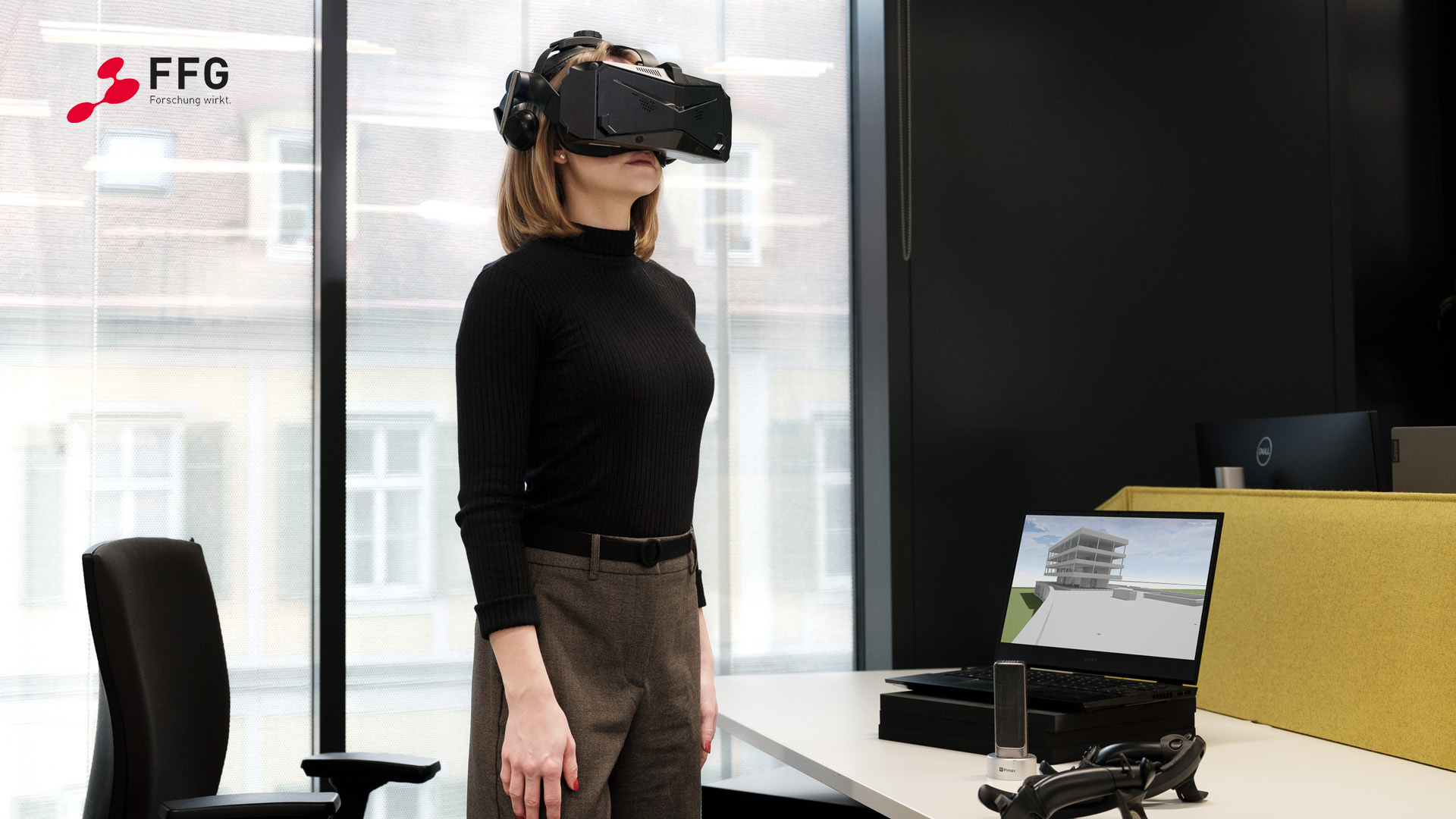
ELEVATE offers an innovative Digital Twin (DT) platform for building optimization, simulation, and data-driven decision-making. The DT serves as a dynamic, virtual equivalent of physical structures, continuously integrating real-world data to provide an evolving and accurate representation of a building’s operational status. ELEVATE leverages advanced technologies, including System Dynamics (SD) and Discrete Event Simulation (DEVS), alongside generative AI for multimodal data integration and sophisticated visualization methods such as AR/VR, to enhance the accuracy, predictability, and adaptability of building management. This enables facility managers, planners, and users to interact with and influence building operations in an intuitive, immersive environment, ensuring continuous performance improvement.
ELEVATE aims to reconcile static design assumptions with dynamic real-world situations. Expected outcomes include a measurable improvement in energy efficiency, with projected operational optimizations of up to 20% through user-driven feedback mechanisms and data-driven decision-making. ELEVATE will incorporate predictive maintenance capabilities, thereby extending the service life of building components and minimizing downtime and maintenance costs. The integration of multimodal data sources improves interoperability between different building systems and leads to a more unified and adaptable architecture. By reducing energy waste and improving resource efficiency, ELEVATE will also contribute significantly to advancing sustainability goals, in line with global climate neutrality efforts.
By integrating real-time data analysis, simulation-based insights, and human-centered interaction models, ELEVATE will set a new standard for smart, sustainable buildings. The scalable and extensible nature of the proposed framework ensures its suitability for both existing buildings and new constructions, providing a replicable blueprint for future energy-efficient, user-centered infrastructures. ELEVATE offers a modern approach to building management and enables a smarter, more sustainable environment for cities and businesses to pursue new strategies for reducing emissions and improving energy efficiency.
Project Page | FFG Elevate